Overview
A busy service-business inbox mixes new leads, active customers, payment questions, scheduling changes, vendor messages, and information that can wait. The hard part is not reading email. It is repeatedly deciding what deserves attention first.
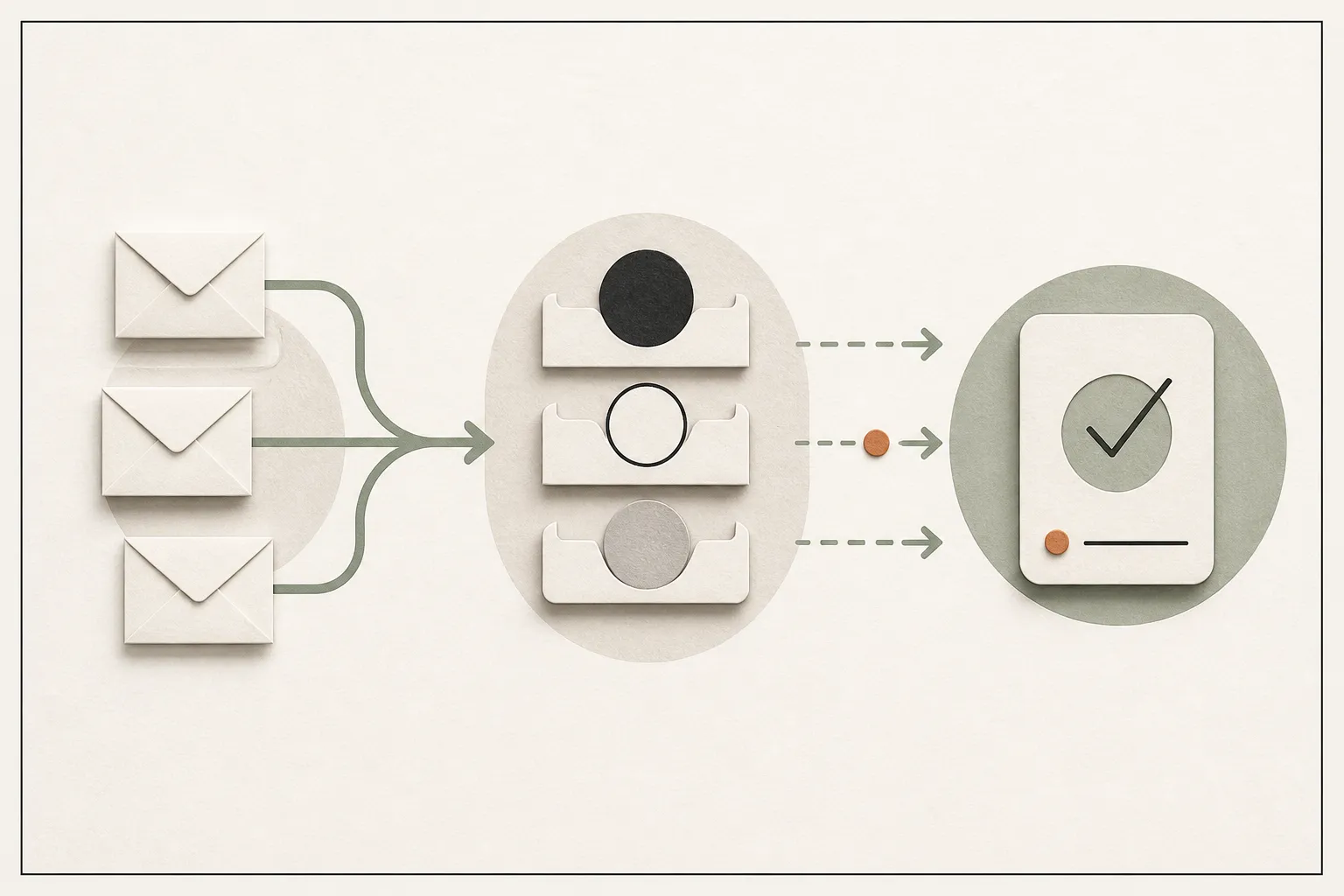
I built an inbox triage workflow that uses the business owner’s own rules to organize that decision. It reads the incoming messages, identifies the likely category and urgency, and prepares a short action list for review.
Start with the owner’s judgment
The system does not invent priorities. We first document how the owner already thinks about the inbox:
- Which messages could affect today’s revenue or customer experience?
- Which conversations are waiting on the business?
- Which messages are informational rather than actionable?
- What should never be handled without a person reviewing it?
Those decisions become reusable instructions instead of remaining in the owner’s head.
What the workflow does
- Reads new messages from the connected inbox
- Groups them into action today, waiting, and read later
- Summarizes the reason each message was classified that way
- Produces a short daily review list
- Keeps a human approval step before messages are moved, answered, or acted on
Why it works
The workflow removes repeated scanning without pretending the inbox can run itself. The owner still makes the important calls. The system simply prepares those calls more consistently and makes the next action easier to see.
A reusable pattern
The same approach can help with lead follow-up, support queues, scheduling requests, document intake, and other work where information arrives faster than a small team can comfortably sort it.
The important part is the structure: connect the source, teach the rules, prepare the decision, and keep a person accountable for the result.